What’s the best awning to keep the heat out of your terrace at the height of summer? It isn’t just about having shade: the colour of the fabric, the material, the type of awning and even the way your facade faces all have a direct effect on how much cooler it feels underneath. Two awnings that cast exactly the same shade can behave very differently at four o’clock on an August afternoon.
Getting the awning right decides whether you actually use your terrace in summer or write it off until September. In this guide we explain, from an installer’s point of view, which awning keeps the heat out best depending on the material and colour, what part acrylic fabric and screen fabrics play, and how to combine systems for genuine sun protection in the Malaga and Granada climate.
Why some awnings keep the heat out better than others
Simply by casting shade, any awning lowers the temperature you feel. But how much heat it actually stops depends on several factors that are worth understanding before you choose:
- The colour of the fabric: it decides how much radiation is reflected and how much is absorbed.
- The material: acrylic fabric, micro-perforated screen fabric and PVC fabric don’t behave the same way.
- The type of awning: a horizontal awning and a vertical one block the sun at different times of day.
- Airflow: if the hot air can’t escape from under the awning, it builds up.
- Which way it faces: a south-facing terrace doesn’t need the same thing as a west-facing picture window.
Let’s go through them one by one so you can work out which awning keeps the heat out best in your particular case.
How heat gets through an awning
When sunlight hits the fabric, its energy splits three ways: some is reflected back out, some is absorbed by the fabric itself and some is transmitted through it into the space below. The absorbed energy heats the fabric up, and a hot fabric gives some of that heat back downwards, just like a radiator.
A good awning for the heat is one that reflects a lot of radiation, lets little through and doesn’t overheat. Quality fabric manufacturers such as Sauleda usually state the reflection, absorption and transmission values of each fabric in the technical data sheets for their collections. It’s the most reliable way to compare colours and materials, and it’s the information we use when we advise you.
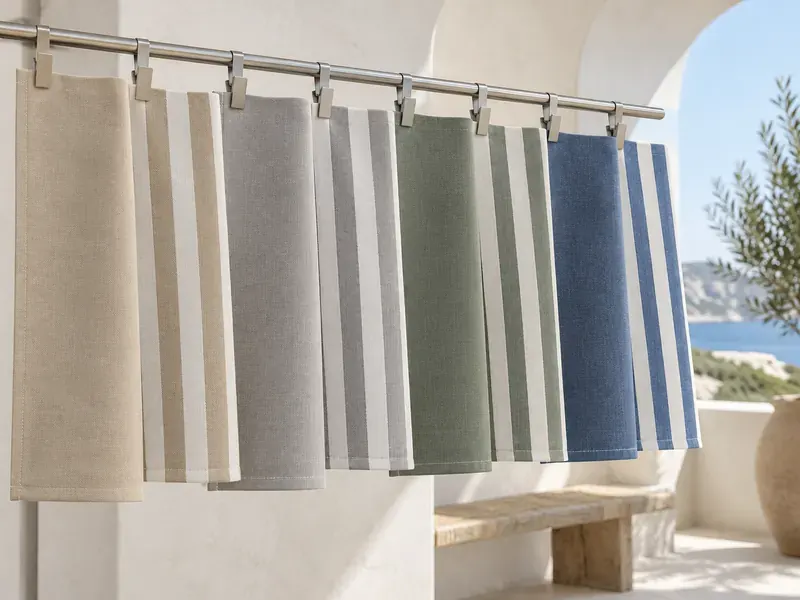
Awning fabric colour and heat: which colour is coolest?
Colour is the factor that makes the biggest difference, and it’s also the one people most often choose purely on looks. It’s worth knowing how each shade behaves before you decide.
Light colours: more reflection
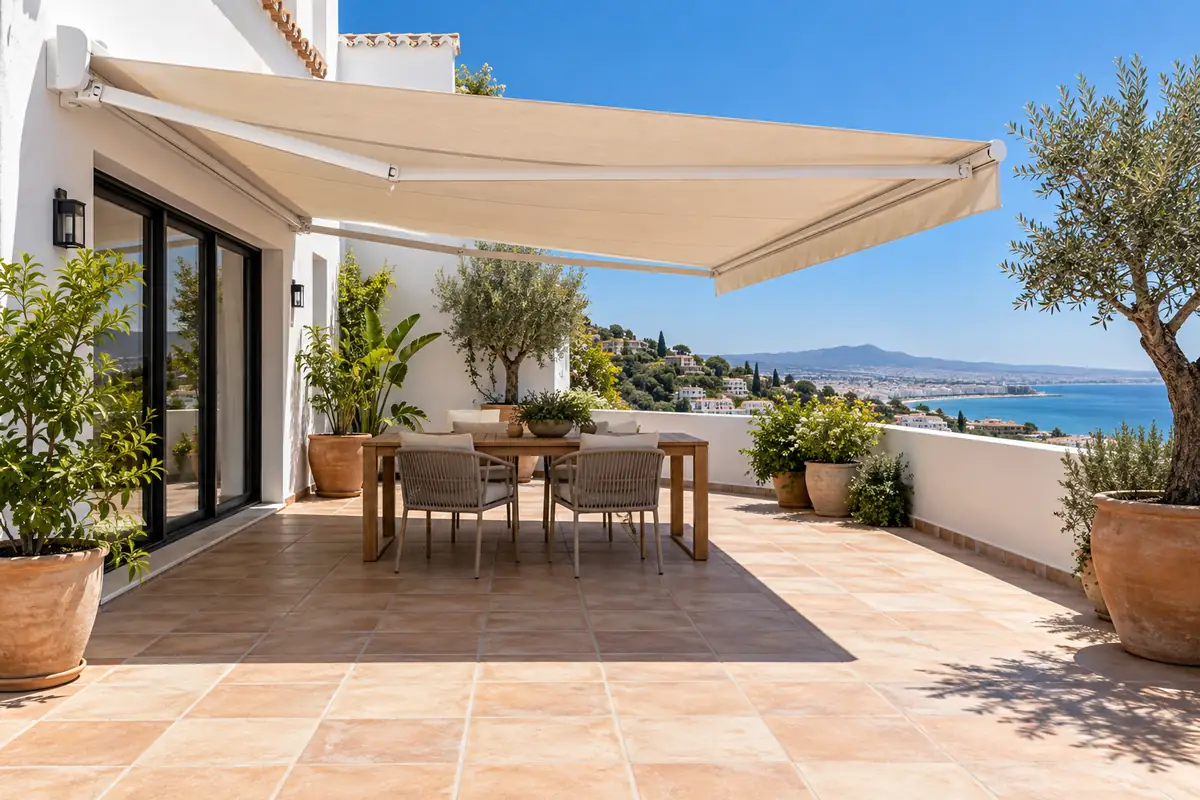
Light shades such as off-white, ecru, beige or light greys reflect a large share of solar radiation before it turns into heat. The fabric warms up less and you avoid the so-called “radiator effect” under the awning. That’s why they’re the most recommended option in hot climates like the Axarquia, the Costa del Sol or the Costa Tropical.
Dark colours: more visual shade, more heat in the fabric
A dark awning lets less light through and cuts glare considerably, which is welcome if you want to read or look at a screen. But it absorbs more radiation, and that energy turns into heat inside the fabric itself. If the air doesn’t circulate well under the awning, you’ll end up feeling that heat anyway.
Stripes and mid-tones
Striped fabrics combine light and dark bands, so they behave somewhere in between. Mid-tones such as medium greys or sand colours strike a good balance between looks, glare and heat. If you’re unsure, the best thing is to look at the sample book on your own terrace, in the real light.
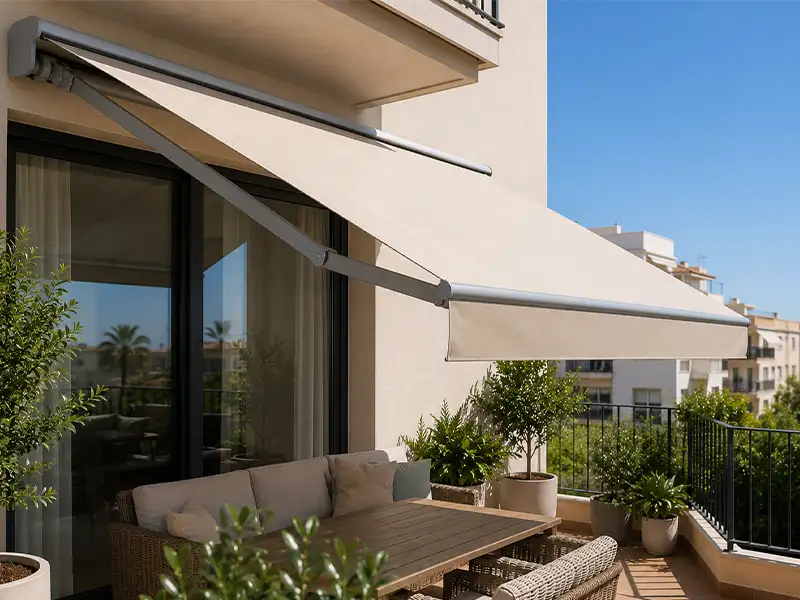
The best awning to keep the heat out, by material
The fabric is the other half of the equation. These are the most common materials for home awnings and how they respond to heat.
Acrylic fabric: the most balanced choice
Acrylic fabric is the most recommended material for cutting the heat on terraces: it breathes, doesn’t hold on to heat the way other materials do and stands up well to the sun, wind and humidity of coastal areas. Quality acrylic fabrics are solution-dyed, meaning the fibre is coloured before it’s woven, which is why they hold their colour better after years in the sun.
At QUBRE we work with Dickson and Sauleda acrylic fabrics, with wide sample ranges in plains and stripes. Choosing an acrylic fabric from a good manufacturer is the foundation of an awning that keeps the heat out and lasts, too.
Acrylic fabric on the coast: how to keep it performing
The sea breeze leaves salt and moisture on the fabric, and dust collects where the fabric folds. Over time, that layer of dirt darkens the surface and makes the fabric absorb more radiation. Cleaning acrylic fabric with water and a mild soap a couple of times a year, and never rolling it up wet, are simple habits that keep it reflecting the sun and preserve its water-repellent finish.
Micro-perforated or screen fabric
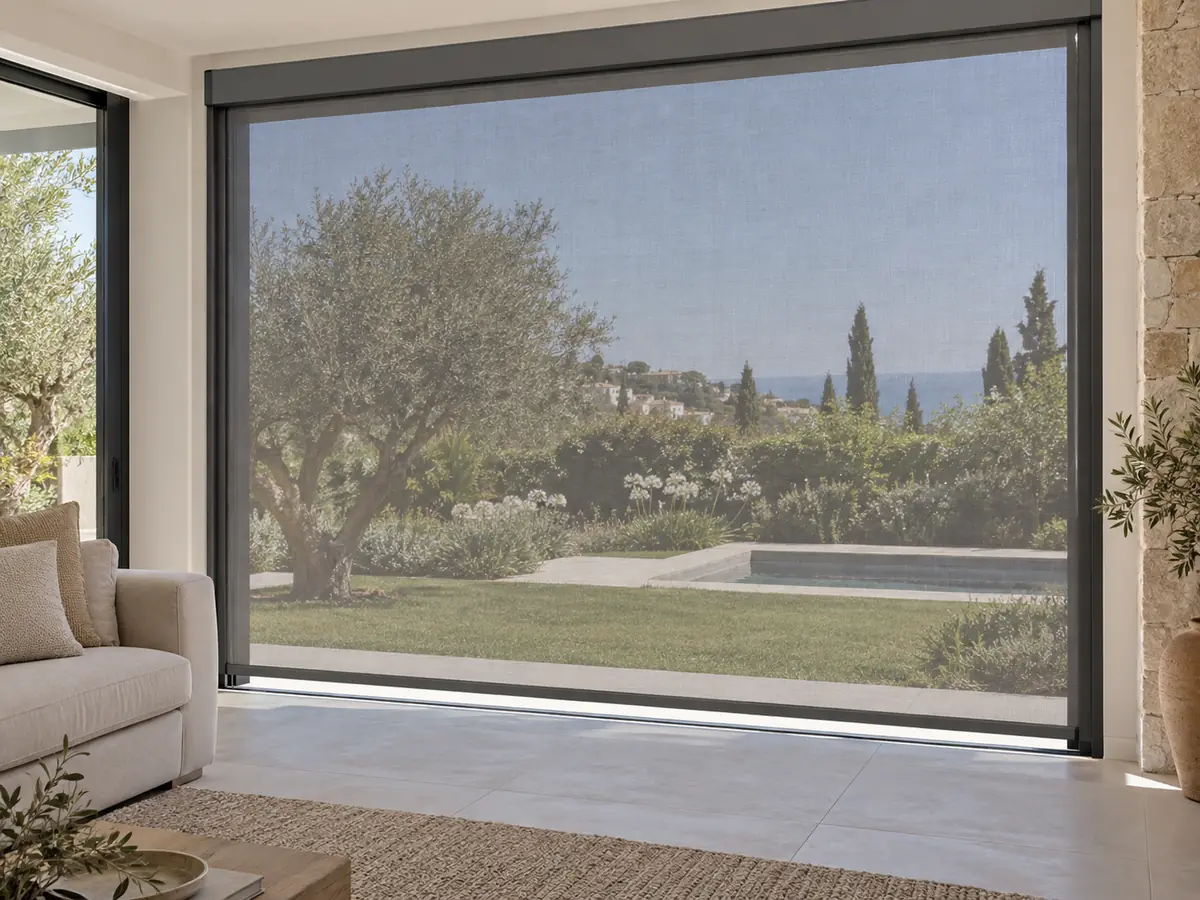
Screen fabrics have a weave with tiny openings that let some light and air through. This reduces the radiator effect, improves airflow and, on vertical awnings, keeps your view of the outside. Each screen fabric has a different openness factor: the tighter the weave, the more sun protection and the less you can see through it.
PVC fabric
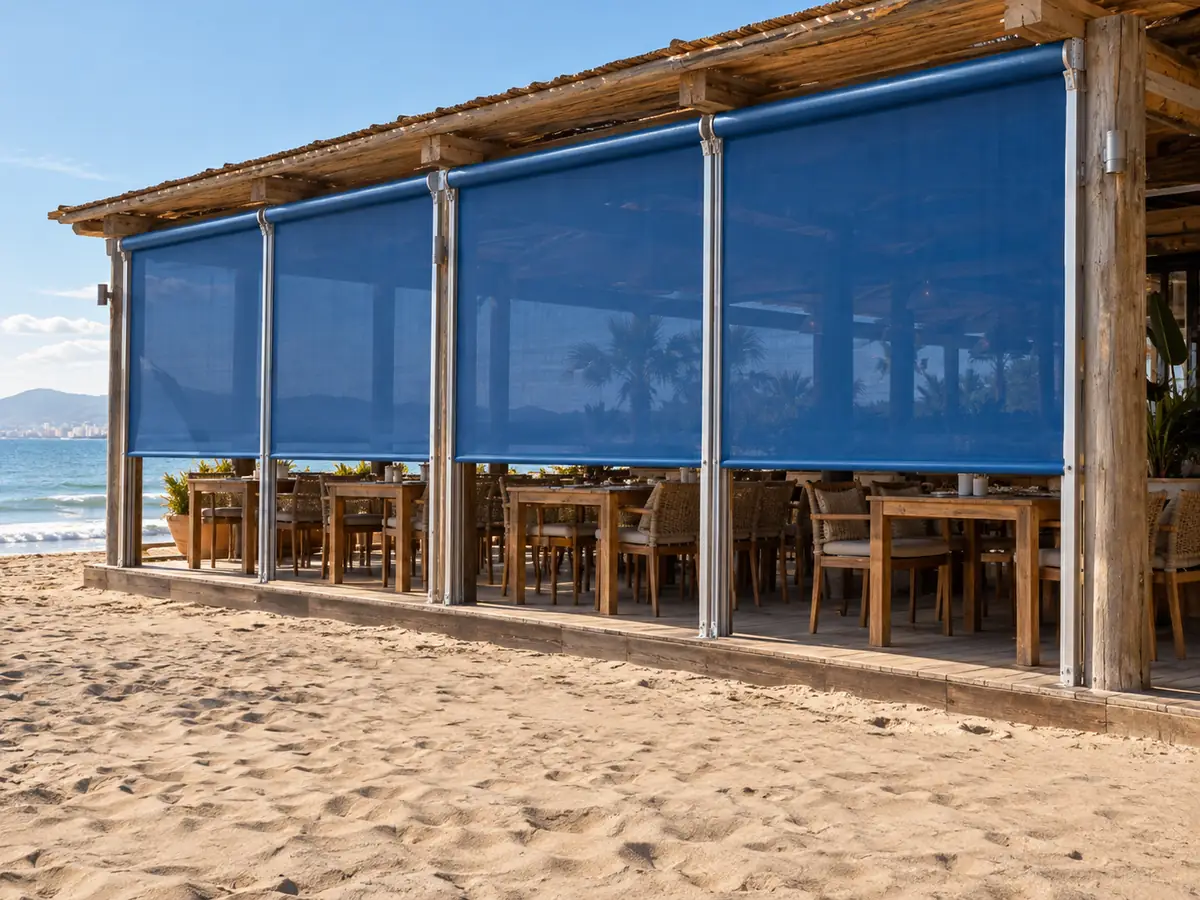
It’s very water-resistant and waterproof, but it gets hotter than acrylic fabric and doesn’t breathe in the same way. It’s a good option if you need complete waterproofing, for example on some bar and restaurant terraces, but it isn’t the best choice if your priority is cutting the heat.
| Material | How it handles heat | Advantages | When to choose it |
|---|---|---|---|
| Acrylic fabric | Breathes and stays fairly cool | Holds its colour, resists sun and salt air | Terrace, balcony and window awnings |
| Micro-perforated screen | Lets air and some light through | Keeps your view of the outside | Vertical awnings and zip screens |
| PVC | Gets hotter and doesn’t breathe | Completely waterproof | When rain is the priority |
Want to see the colours on your own terrace? We’ll bring the Sauleda and Dickson sample books, measure up for free and give you a written quote with no obligation and a fixed price in under 24 hours. Get a free quote or call us on +34 694 57 17 33.
Which awning keeps the heat out best, by type of awning
The same fabric performs differently depending on the system it’s fitted to, because each awning blocks the sun from a different angle.
Horizontal awnings: folding-arm, cassette and monobloc
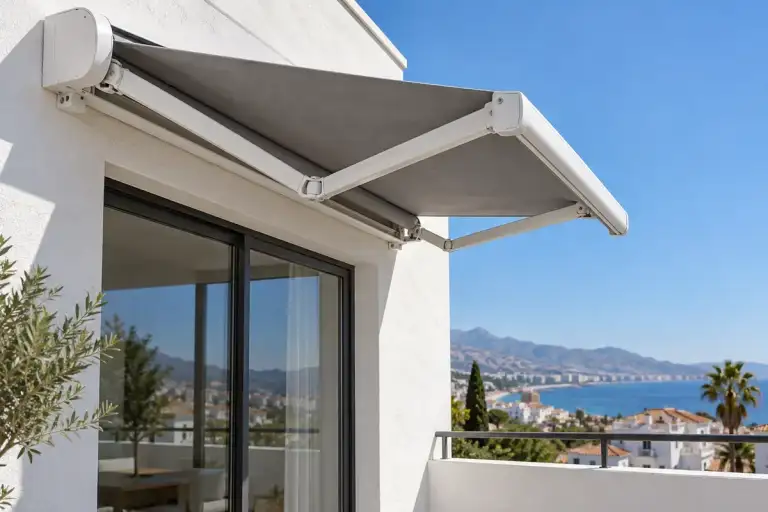
Retractable awnings and cassette awnings project the fabric outwards and give generous shade when the sun is high, in the middle of the day. Their pitch also helps hot air escape from the open side. For very large terraces, a monobloc awning lets you cover a bigger area with a sturdy frame.
On top of that, the cassette protects the fabric from sun, rain and dust when it’s retracted. Fabric that doesn’t deteriorate keeps its ability to reflect the sun for longer, so it also affects how much heat the awning keeps out as the years go by.
Vertical awnings, roller awnings and zip screens
When the sun is low, in the morning or late afternoon, it comes in almost horizontally and an arm awning can’t stop it. That’s where vertical and roller awnings and zip screens come in: they drop the fabric in front of the opening and block the sun before it reaches the glass. With its fabric held in side guides, a zip screen stays taut even in the wind.
Drop arm awnings for balconies and windows
A drop arm awning projects the fabric outwards at an angle from the railing or the window. It shades the glass without making the room completely dark and lets the air circulate, which makes it a very effective solution for south-facing balconies.
Pergolas
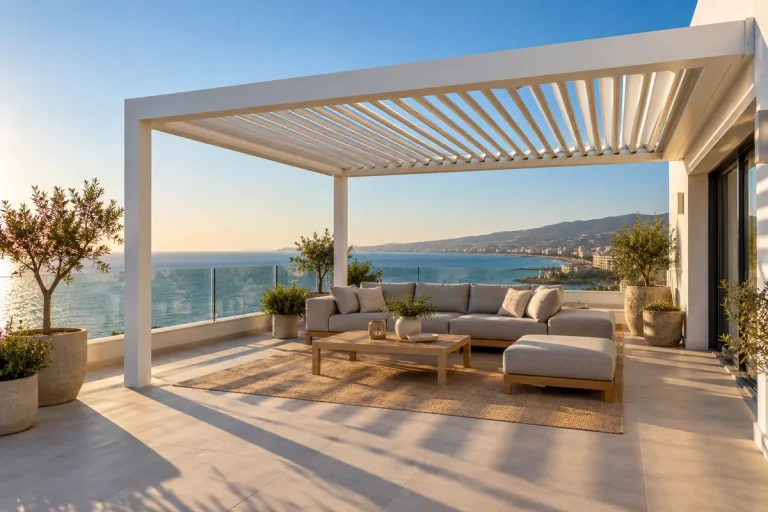
If you want permanent shade over a large area, a bioclimatic pergola lets you angle the louvres to let hot air out and control how much sun comes in. It’s another form of sun protection that works alongside awnings.
Airflow: the detail almost everyone overlooks
Good sun protection doesn’t mean sealing your terrace up completely. The air trapped under the awning heats up over the hours, and if it has nowhere to go, the shade loses much of its effect. That’s why it’s important to:
- Give horizontal awnings a pitch, so the hot air rises and escapes from the open side.
- Combine vertical screens with gaps for ventilation, rather than sealing every side at once.
- Choose fabrics that breathe, such as acrylic or screen fabrics, rather than completely airtight materials.
When airflow is taken into account, you’ll notice the awning’s sun protection far more in the hottest hours of the day.
Which way your terrace faces changes everything
To work out which awning keeps the heat out best at your home, the first step is to look at which way the facade faces and what time of day you use it:
- South-facing: the sun is high in the middle of the day. A horizontal awning with a good projection, such as a folding-arm or cassette awning, is usually the best option.
- West-facing: the afternoon sun comes in low and very hot. Here a vertical awning or a zip screen does the job that an arm awning simply can’t.
- East-facing: the morning sun is gentler, but it pours straight into bedrooms and kitchens. Vertical awnings and drop arm awnings work very well.
- Penthouses and very exposed terraces: the usual approach is to combine a horizontal awning with vertical screens, or to go for a pergola.
If you’d like radiation and temperature data for your area, AEMET, Spain’s state weather agency, publishes climate information for each town. At the visit, we look at the sun’s actual path across your terrace.
How to decide, step by step, which awning keeps the heat out best at your home
If you want a practical way to settle the question, follow this order, which is the same one we use at every visit:
- Notice what time of day the sun bothers you and where it comes in: from above or from the side.
- Check which way the facade faces to see whether you need a horizontal system, a vertical one or both.
- Choose the fabric: acrylic for terrace and balcony awnings, screen fabric when you want to keep the view.
- Pick the colour with the sample book in front of you and in your terrace’s real light, favouring light or mid-tones.
- Think about airflow so the hot air can escape.
- Consider a motor and sensors, so your sun protection works even when you’re not at home.
With these six steps, choosing the awning that keeps the heat out best stops being a matter of taste and becomes a technical decision.
A well-chosen awning also helps you save energy
Exterior sun protection stops radiation before it passes through the glass and heats up your home. That’s why it’s far more effective against heat than a curtain or an indoor blind, which only act once the heat is already inside. IDAE (Spain’s Institute for Energy Diversification and Saving) identifies exterior sun protection as one of the most effective measures for reducing cooling demand in the hot months.
In practice, a well-positioned awning in front of large windows means the air conditioning has to work less. And if you add a motor with a sun sensor, the awning opens by itself when the sun gets strong, even when you’re not at home. We explain how in our guide to awning motors.
Common mistakes when choosing an awning for a hot terrace
- Choosing the colour on looks alone: a very dark shade on a south-facing terrace can trap heat under the fabric.
- Closing the space in completely: without a way out for the hot air, the shade loses its effectiveness.
- Relying on a horizontal awning alone on a west-facing facade: the afternoon sun gets in underneath.
- Choosing a poor-quality fabric: it loses its colour and properties sooner and ends up letting more heat through.
- Not looking after the fabric: built-up dirt changes the way it behaves. We explain how to clean an awning step by step.
Our recommendation for the Malaga and Granada climate
For the local climate, the combination that usually works best is acrylic or screen fabric in light or mid-tones, on the right system for the way you face: a horizontal awning for the high sun and a vertical awning or zip screen for the low sun. If the terrace is very exposed, a cassette protects the fabric and extends its life, and a motor with sensors means you can forget about opening and closing it.
On the coast, it also matters a great deal that the frame is powder-coated aluminium with stainless fixings, because salt air shows no mercy to poor-quality parts. That’s how we work at QUBRE right across the Axarquia, in Malaga city, on the Costa del Sol and on the Costa Tropical.
We’ll tell you which awning keeps the heat out best on your terrace. We look at which way it faces, show you the fabrics and give you a fixed-price quote, free and with no obligation. Get a free quote or call us on +34 694 57 17 33.
Frequently asked questions about the best awning to keep the heat out
How much can a good awning lower the temperature?
An awning with the right material and colour noticeably reduces how hot it feels in its shade, but the exact difference depends on which way it faces, the airflow and the conditions on each terrace.
Which awning colour is coolest: dark or light?
In hot climates like Malaga’s, light colours or mid-tones usually work better, because they reflect more radiation instead of absorbing it and heating up.
Does PVC fabric keep the heat out as well as acrylic?
No. Acrylic fabric and micro-perforated fabrics usually perform better in the heat than PVC, which tends to get hotter because it doesn’t breathe.
What’s the best awning for a west-facing window?
A vertical awning, a roller awning or a zip screen, because the afternoon sun comes in low and only a system that drops down in front of the glass can stop it.
What’s the best awning to keep the heat out on a balcony?
On balconies, a drop arm awning with light acrylic fabric usually works very well, because it shades the glass and lets the air circulate. If the sun comes in from the side, you can add a roller awning as well.
Does an outdoor awning keep out more heat than a curtain?
Yes. Exterior sun protection stops radiation before it passes through the glass, whereas an indoor curtain only acts once the heat is already inside your home.
Which fabric brands do you use?
At QUBRE we work with Sauleda and Dickson fabrics, with wide sample ranges of plain and striped colours for you to choose from on your own terrace.
Conclusion: choose your awning with the heat in mind too
Knowing which awning keeps the heat out best helps you choose for how cool it keeps you, not just for the colour you like. The colour, acrylic or screen fabric, the type of awning and which way you face make a real difference to how your terrace feels in summer. If you’d like to explore other systems, read our guides to the retractable awning and the roll-up awning.
Book your free visit today and we’ll advise you on the combination of fabric and system that best protects your terrace from the sun.