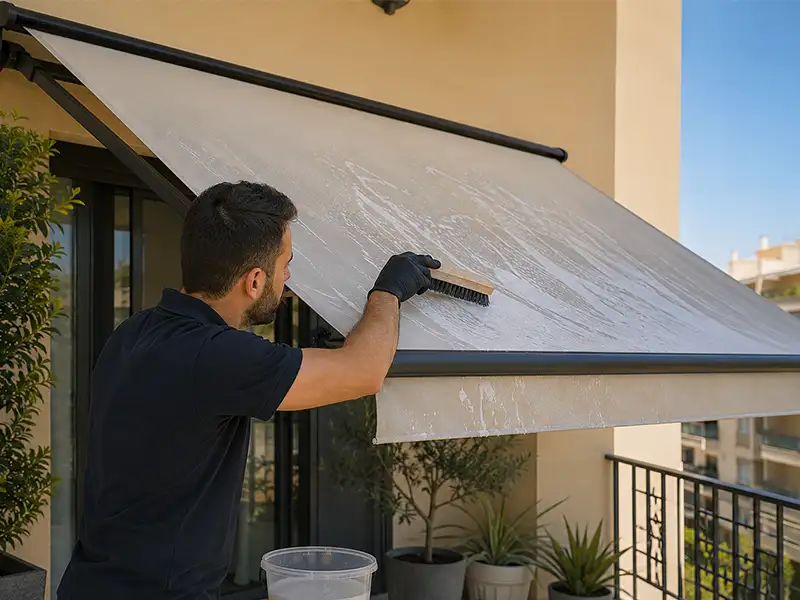
Knowing how to clean an awning without damaging the fabric or the frame is the cheapest way to make it last for years. An awning that gets cleaned and checked every so often keeps opening, staying taut and giving shade just like on day one; leave one to fend for itself and it starts building up stains, mould and slack far sooner than it should.
You don’t need to be an expert: with water, mild soap and a soft brush you can handle the basics yourself. In this guide we explain how to clean an awning step by step, how to clean awning fabric depending on the type, how to deal with the most common stains, what to check on the arms and motor, and when to call in a technician. All of it with the Malaga and Granada Costa Tropical climate in mind.
Why awning maintenance makes such a difference to its lifespan
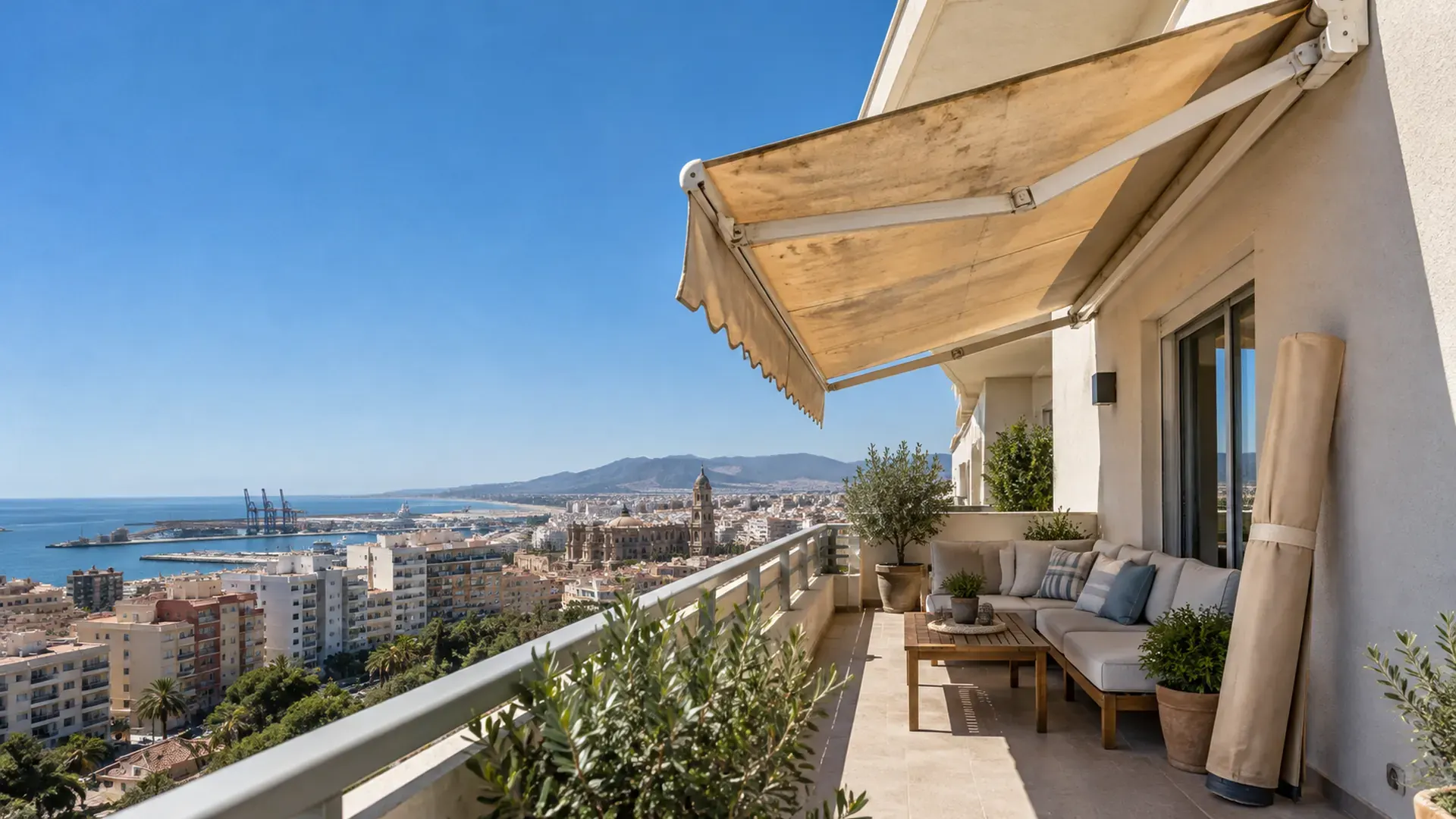
An awning lives outdoors all year round. The powder-coated aluminium frame is built to take it, but the fabric is a textile that faces direct sun, dust, pollen, rain and, on the coast, air full of salt. If that dirt is left to sit for months, the fabric fades, holds on to moisture and starts to show mould stains.
That’s why awning maintenance isn’t just about looks. Clean fabric dries faster, keeps its water-repellent finish for longer and goes on blocking the sun just as well. And arms and fixings that are checked in time stop a little bit of play from turning into an expensive repair. In short, learning how to clean an awning saves you money on repairs and puts off the day you need new fabric.
What you need to clean the fabric
Before you start, get everything ready. You don’t need any special products:
- A soft-bristled brush or a non-scratch sponge. Avoid stiff brushes and scourers.
- Lukewarm water, never very hot, because too much heat can affect the fabric’s finish.
- Mild soap, such as hand soap or a gentle detergent with no bleach or solvents.
- A hose with a gentle spray nozzle for rinsing, without high pressure.
- A stable ladder and, if the awning is high up, someone to help you. Safety comes first.
If your awning is very high up or over a courtyard, don’t take the risk: knowing how to clean an awning isn’t enough here, and the job should be done by a professional with the right safety equipment.
How to clean an awning step by step
This is the method we recommend for cleaning any type of roller-mechanism awning, whether it’s a retractable awning, a cassette or a drop arm. Follow the steps in order and don’t skip the drying.
1. Choose a dry, still day
To clean the fabric, extend the awning fully on a dry, overcast day or first thing in the morning. In strong sun the water evaporates too quickly and leaves tide marks; in the wind, the fabric moves about and working at height is more dangerous.
2. Remove the dry dirt first
Before you wet anything, run the brush over both sides of the fabric while it’s dry to get rid of dust, leaves, cobwebs and sand. If you wet it straight away, the dust turns into mud and works its way into the weave. This step is key to cleaning the fabric without spreading the dirt around.
3. Apply lukewarm water and mild soap
Mix the soap with lukewarm water and scrub the fabric gently, following the direction of the seams, from top to bottom. There’s no need to press hard: the soap does the work. Leave the suds for a few minutes without letting them dry, and if it’s hot, work in small sections.
4. Rinse with plenty of clean water
Rinse thoroughly with the hose on low pressure until there’s no trace of soap left. Leftover detergent attracts dust and can leave marks as it dries, so this step matters just as much as the wash itself.
5. Let it dry completely before retracting
Never retract the awning while it’s damp. Leave it extended until the fabric is completely dry on both sides. Rolling up wet fabric is the main cause of damp stains and mould. If you get caught in the rain and have to retract it wet, extend it again as soon as the sun comes out.
How to clean an awning according to the type of fabric
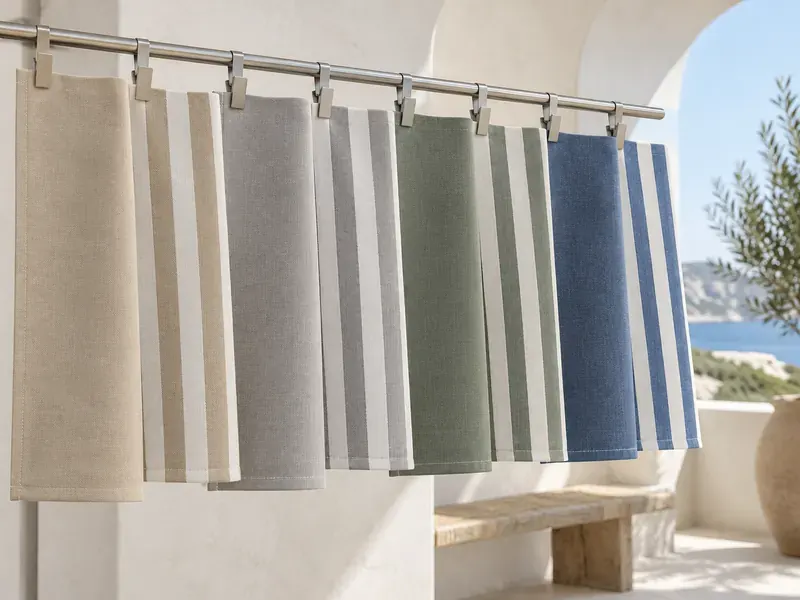
Not all fabrics behave the same way. Before you clean the fabric, it’s worth knowing what it’s made of, because that changes the care slightly. If in doubt, the label or the manufacturer’s data sheet is always your reference. At QUBRE we work with Sauleda and Dickson fabrics, and we always recommend following the care instructions from your fabric’s manufacturer.
Acrylic fabric
This is the most common fabric on terrace and balcony awnings. It’s breathable, stands up well to the sun and usually has a finish that repels water and dirt. To clean acrylic fabric, lukewarm water, mild soap and a soft brush are all you need; avoid scrubbing hard or using harsh products that damage that finish.
Screen or micro-perforated fabric
This is the typical fabric on vertical awnings and zip screens. Because the weave is open, dust gets into the tiny holes. To clean screen fabric, brush it dry, wash it with a soft sponge and soapy water and rinse well. Don’t stretch it or scrub it hard, or you could distort the weave.
PVC fabric
This is a coated, waterproof fabric, common on businesses. Its smooth surface makes cleaning a PVC awning straightforward: a sponge and mild soap. Avoid solvents and abrasive products, which can damage the coating.
| Type of fabric | Where it’s used | How to clean it | What to avoid |
|---|---|---|---|
| Acrylic | Retractable, cassette and drop arm awnings | Soft brush, lukewarm water and mild soap | Bleach, solvents and hard scrubbing |
| Screen / micro-perforated | Vertical awnings, roller awnings and zip screens | Dry brushing and a sponge with soapy water | Stretching the fabric or using pressure |
| PVC | Businesses, hospitality, large areas | Sponge with mild soap and a good rinse | Abrasives and solvent-based products |
Common stains and how to deal with them
Regular awning cleaning sorts out most problems, but some stains need a bit more attention. The golden rule is to act as soon as possible and always test first on an area that’s out of sight.
Bird droppings
Very common near the coast and close to trees. Don’t scrape them off, as you could damage the fabric. Let them dry, remove whatever comes away with the soft brush, then clean that area of the fabric again with lukewarm water and mild soap.
Resin, sap and pollen
If your awning is under a pine or next to trees, it’s normal to get drops of resin or a layer of pollen in spring. Pollen comes off with normal brushing and washing. With resin, don’t use solvents on your own: if the stain won’t shift, ask us before applying any product.
Mould and damp stains
These almost always appear when the awning is retracted wet or stays rolled up for a long time in damp areas. If you spot dark patches, clean the fabric again with lukewarm water and mild soap, rinse and leave it to dry in the sun. Some manufacturers recommend specific products for these stains: follow their instructions and avoid bleach unless the manufacturer expressly allows it.
Salt air on the coast
In Torre del Mar, Nerja, Torrox, Rincon de la Victoria or anywhere along the coast, the sea breeze leaves a film of salt on the fabric and the frame. That salt attracts moisture and dust. A rinse with fresh water every now and then, especially after stormy days or a spell of levante (the strong easterly wind), goes a long way for awning maintenance on the seafront.
Fabric still not looking right however much you clean it? We check your awning at home, tell you whether a clean is enough or new fabric makes more sense, and give you a written quote, with no obligation and a fixed price, in under 24 hours. Get a free quote or call us on +34 694 57 17 33.
Awning maintenance beyond the fabric
Looking after an awning isn’t only about washing the fabric. The frame, the arms and the operating mechanism need a look every so often too. Use each clean as a chance to run through this quick check.
Arms and joints
As part of your awning maintenance, extend and retract it a couple of times: the arms should move smoothly, with no noises or jerks. If you notice one arm dropping lower than the other, the fabric not sitting taut or a click at the elbow, there may be a problem with the joint or the tension springs. Don’t take it apart: those springs are under a lot of force and should only be handled by a technician.
Fixings, brackets and screws
Check that the wall brackets have no play and that there’s no rust on the screws. On the coast, stainless fixings make all the difference, which is why we always use them in our installations together with powder-coated aluminium. Clean the frame with a damp cloth and mild soap, then dry it.
Cassette and front bar
If you have a cassette awning, wipe the case with a cloth and check that it closes properly when retracted. A lot of dirt builds up on the front bar, so don’t forget it when you clean the fabric.
Motor, remote control and wind sensor
If your awning is motorised, awning maintenance includes checking that it opens and closes all the way without stopping halfway, and that the remote control responds properly. The wind sensor should be clean and unobstructed: if it’s dirty or covered, it may not react as it should. Never wet the motor or the electrical connections directly. To find out more about how they work, see our guide to awning motors and our awning motorisation service.
A seasonal awning maintenance calendar
A good way to make sure you don’t forget is to spread your awning maintenance across the year. This is the routine we recommend to our customers in Malaga and Granada:
| Season | What to do | Why |
|---|---|---|
| Spring | A full clean of the fabric and frame before the season. Check the arms, fixings and motor. | Removes the winter dust and pollen and gets the awning ready for heavy use. |
| Summer | A dry brush now and then and a fresh-water rinse if you live near the sea. Retract it when it’s windy. | This is when it gets the most use, sun and salt air. |
| Autumn | A second deep clean at the end of the season. Remove leaves and check the fabric is dry before retracting it. | Stops the awning spending the winter rolled up with dirt or damp inside. |
| Winter | Extend the awning on the odd dry day to air it. Check it after windstorms or heavy rain. | Prevents mould and catches storm damage in time. |
Common mistakes when cleaning awning fabric
A lot of fabrics wear out early because people don’t know how to clean an awning properly. These are the mistakes we see most often:
- Using a pressure washer: it can open up seams, distort the fabric and strip off the water-repellent finish.
- Using bleach or household cleaning products: they fade and damage the fabric, unless the manufacturer says otherwise.
- Scrubbing with scourers or stiff brushes: they wear the surface, so the fabric gets dirty faster next time.
- Retracting the awning wet: the quickest route to mould and damp stains.
- Cleaning in strong sun: the soap dries on the fabric and leaves tide marks.
- Forgetting the rest of the awning: cleaning the fabric without checking the arms or fixings lets faults slip through that cost more later on.
Awning maintenance on the Malaga and Granada coast
The climate in the Axarquia, on the Costa del Sol and on the Costa Tropical is hard on awnings. Three factors affect awning maintenance:
- Very strong sun for much of the year: it speeds up fading. If you need new fabric, it’s worth choosing it carefully; we explain how in which awning keeps the heat out best.
- Levante and poniente winds: always retract the awning when the wind is strong. A wind sensor does it for you, even when you’re not at home.
- Salt air: on the seafront, rinse the fabric and frame with fresh water more often.
If you live in areas such as Velez-Malaga, Nerja or Marbella, knowing how to clean an awning on the coast makes a real difference to how long it lasts.
When it’s time for new fabric or a professional check
There comes a point when, however well you clean it, the fabric has simply had its day. These are the signs that it needs a check or new fabric:
- Stains that won’t come out with regular cleaning.
- Heavy fading, or areas where the fabric looks thin or brittle.
- Rips, split seams or tears along the edges or the valance.
- The fabric no longer repels water and soaks through straight away.
- The awning doesn’t pull taut when extended, or it sags into pockets.
- Noises, play in the joints, or one arm dropping lower than the other.
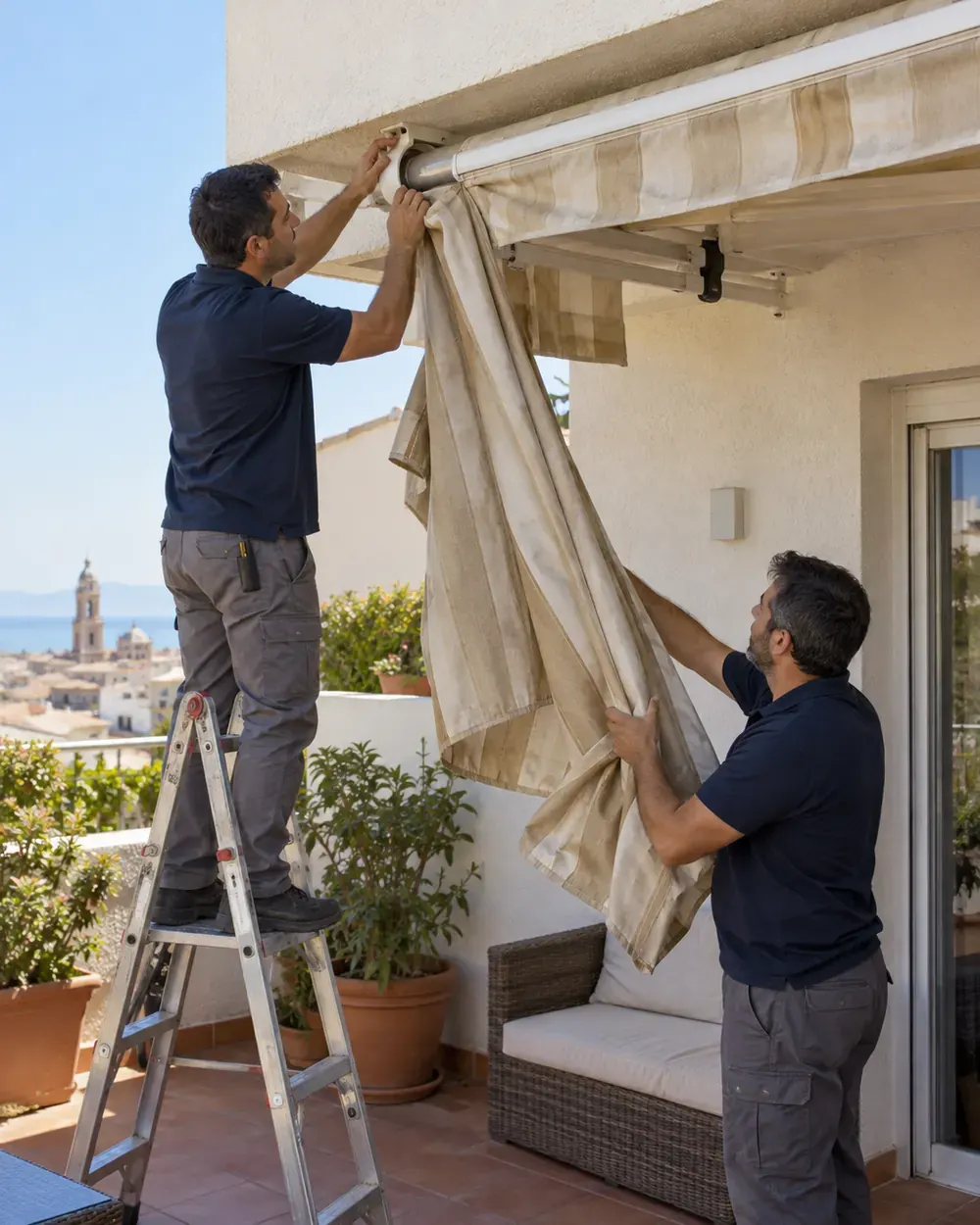
In many cases you don’t need to replace the whole awning: replacing the fabric and adjusting the frame is enough. That’s exactly what we do in our awning repairs and fabric replacement service, with Sauleda and Dickson fabrics and QUBRE’s own technical team. To learn about other systems, read our guide to the retractable awning.

After-sales service, including awnings fitted by other installers
It doesn’t matter who installed your awning: at QUBRE we offer after-sales service, servicing and repairs for installations by other companies too. We check the fabric, the arms, the fixings and the motor, and explain what your awning needs, with a written quote and a fixed price. We cover the whole Axarquia, Malaga city, the Costa del Sol and the Costa Tropical in Granada, including businesses with awnings for bars and restaurants, where awning maintenance matters even more because of daily use.
A professional check of your awning, even if we didn’t install it. Free home visit and advice, a written quote with a fixed price in under 24 hours and our own technical team. Get a free quote or call us on +34 694 57 17 33.
FAQs: how to clean an awning
Can I use a pressure washer to clean my awning?
It isn’t a good idea. The pressure can open up seams, distort the fabric and strip off its water-repellent finish. It’s safer to clean it by hand with a soft brush, lukewarm water and mild soap, then rinse with a hose on low pressure.
How often should I clean my awning?
We recommend a full clean at least twice a year, in spring and at the end of summer, plus removing leaves, dust or the odd patch of dirt whenever you see it building up. On the seafront it’s worth rinsing with fresh water more often.
What’s the best product for cleaning awning fabric?
For regular cleaning, lukewarm water and mild soap are all you need. Avoid bleach, solvents and abrasives. If you need a specific product for a particular stain, always follow the instructions from your fabric’s manufacturer.
How do I get mould off my awning fabric?
Wash the area with lukewarm water and mild soap, rinse well and let it dry completely in the sun before retracting it. If the stain won’t shift, check the manufacturer’s instructions or ask for a check, because sometimes the fabric is already damaged.
Can I retract my awning when it’s wet?
You can if it’s raining and you need to protect it, but extend it again as soon as you can so it dries completely. Leaving the fabric rolled up damp for days encourages mould and stains.
Is it normal for awning fabric to fade over time?
Some loss of colour is normal from sun exposure, but heavy fading, along with fabric that’s gone thin or no longer repels water, means it’s time to think about new fabric.
Do you service awnings installed by other companies?
Yes. At QUBRE we offer after-sales service, servicing, repairs and new fabric for awnings fitted by other installers too, in Malaga, the rest of the province and the Costa Tropical in Granada.
In short: simple maintenance, an awning that lasts longer
Learning how to clean an awning doesn’t take long and saves you from having to replace it sooner than necessary. That’s all the awning maintenance you need: a dry brush, lukewarm water with mild soap, a good rinse, drying it completely and a check of the arms, fixings and motor twice a year.
And when cleaning is no longer enough, QUBRE can help with servicing, repairs or new fabric, in Malaga, the rest of the province and the Costa Tropical in Granada. Get a free quote and we’ll get back to you in under 24 hours.