A terrace enclosure turns a space you use for half the year into another room of the house: sheltered from wind, rain and dust, but with all the light and the views. In Malaga, the Axarquía and the Costa Tropical it’s one of the questions we’re asked most, especially for flats and penthouses exposed to the levante wind and for villa porches that get cold in winter.
Before you enclose, it’s worth being clear on three things: which type of enclosure suits your terrace, which permits may be needed and which materials really stand up to life by the sea. In this guide we explain it from our installation team’s experience, without ballpark prices or promises that don’t depend on your case.
What a terrace enclosure is and what you gain
A terrace enclosure is any system that closes the front and, if needed, the sides of a terrace, balcony or porch. It can be glass with aluminium frames or fabric, such as a zip screen or a windbreak awning. What they have in common is that you decide when the terrace is open and when it’s protected.
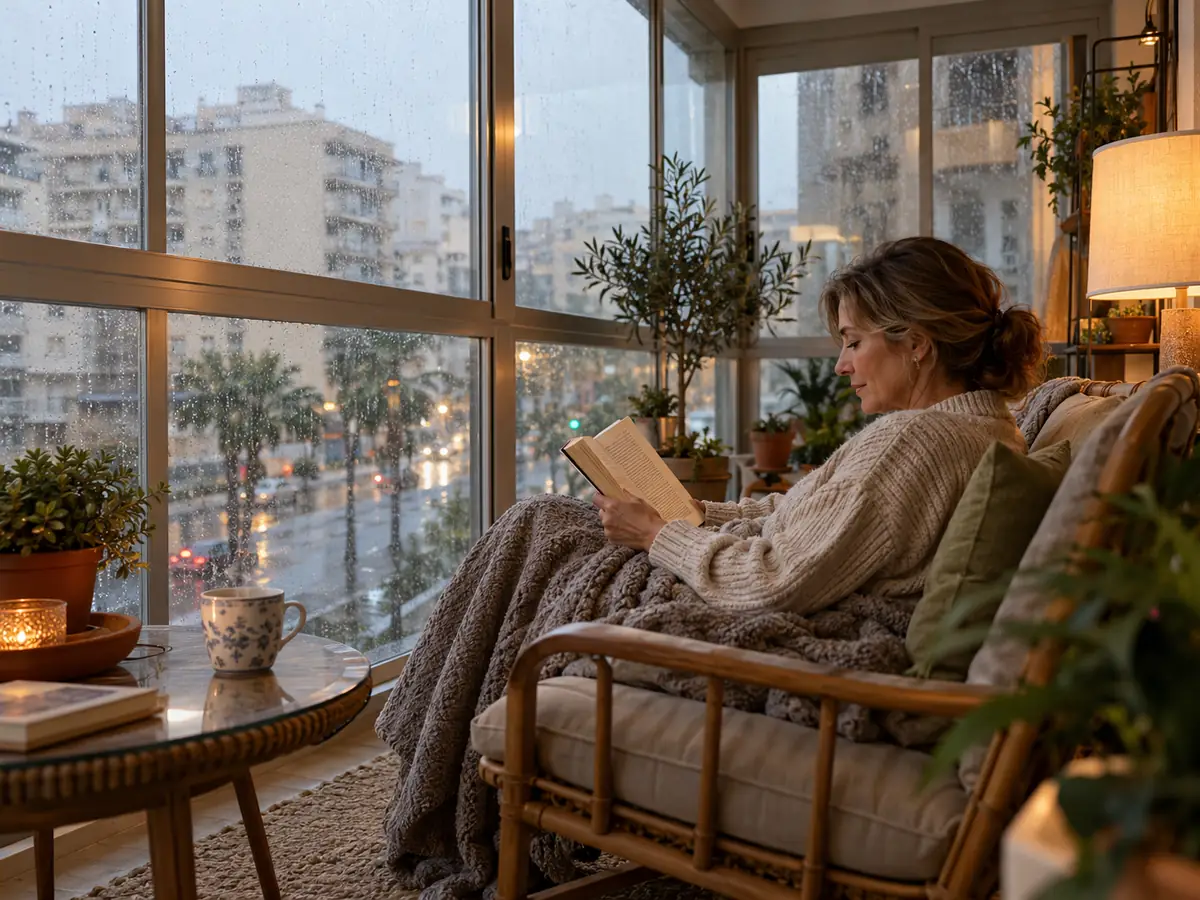
On the coast, the benefits show from the very first winter:
- You use the terrace all year: as a sunny sitting room in January and fully open in summer.
- You stop the wind: the levante and poniente no longer knock over plant pots or fill the house with dust.
- You keep the rain out: furniture and floor stay dry even when it rains sideways.
- You gain sound insulation: noise from the street or the seafront promenade drops with the enclosure closed.
- You keep the light and the views: with glass, you can still see the sea or the mountains from the living room.
Types of terrace enclosure
Not all enclosures behave the same. Choosing well depends on how much you want to close, how much wind your terrace gets and what your community of owners allows.
Aluminium and glass sliding panels
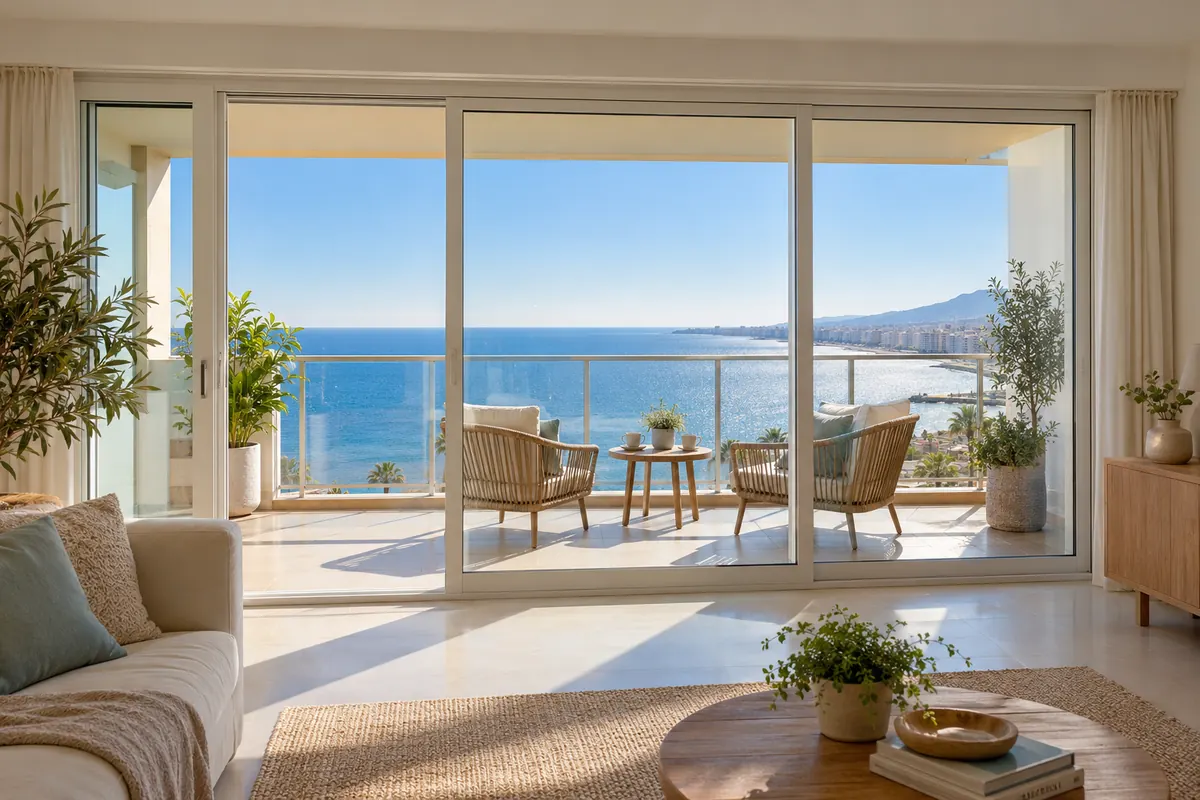
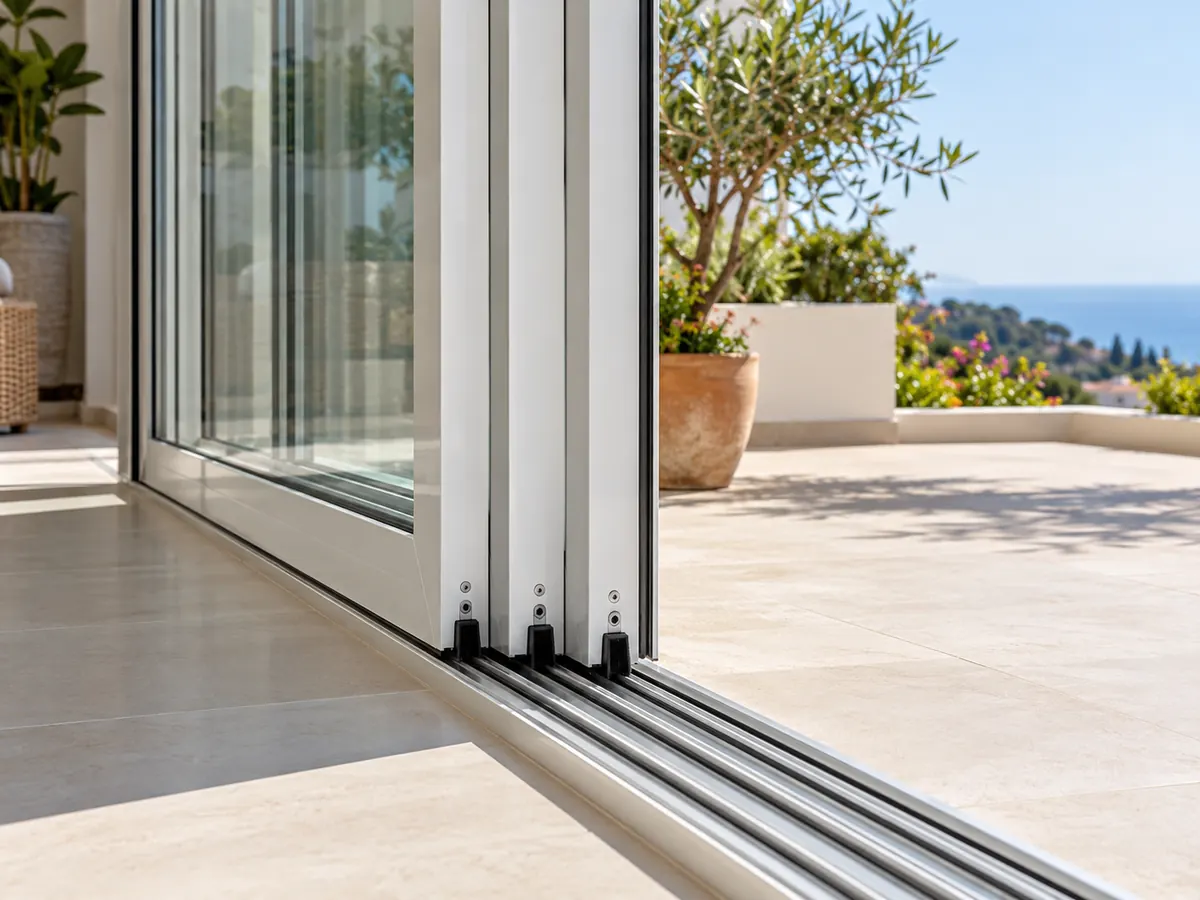
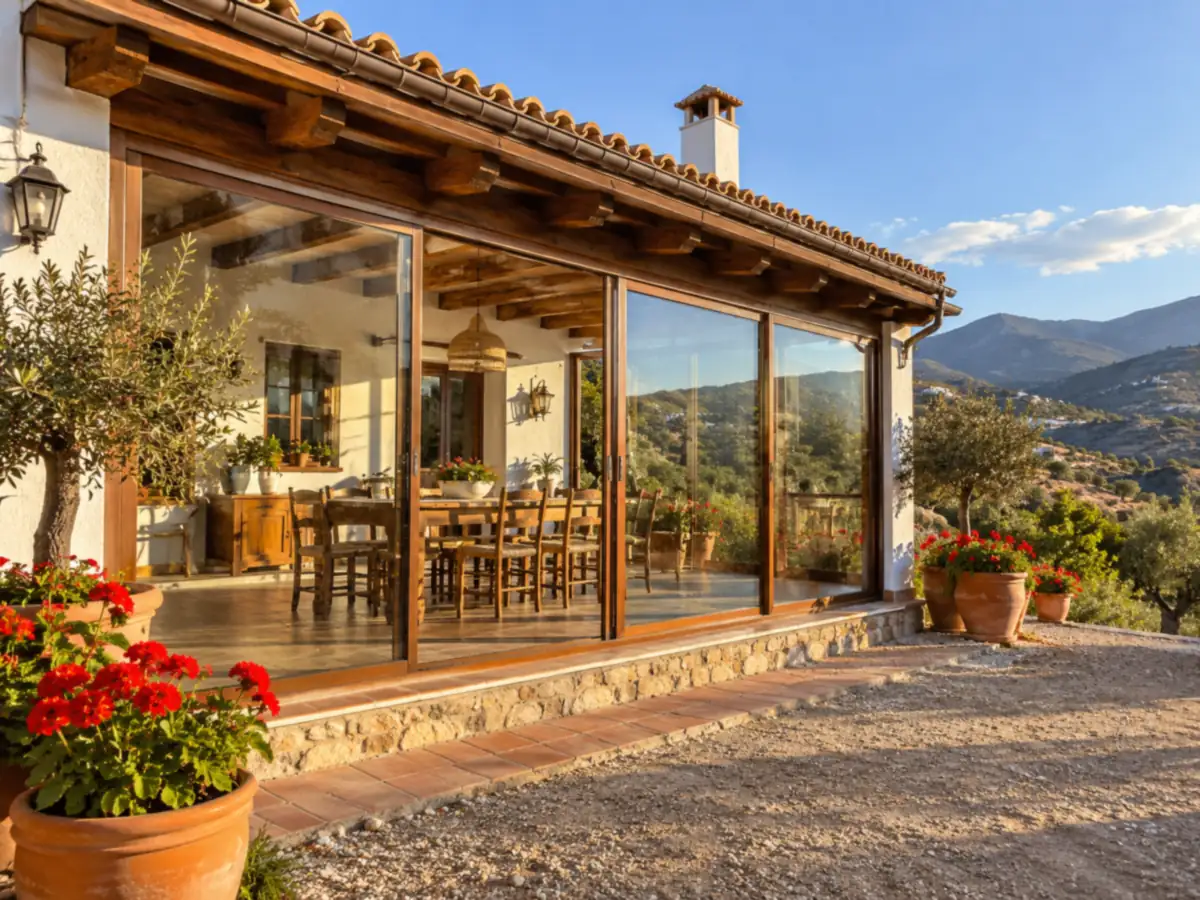
These are glass panels set in aluminium frames that slide along tracks, like a very large sliding window. It’s the terrace enclosure that seals best against wind and water, depending on the range, and the one we usually install at QUBRE. They come with two or more tracks, frames in different colours, including wood effect, and adapt to almost any opening.
Their weak point is that the stacked panels always take up part of the opening: when open, one panel sits in front of another.
Glass enclosure or fabric screens?
It’s the first decision. Glass turns the terrace into another room: it seals against wind, rain and noise and lets all the light in. Fabric screens, such as a zip screen or a windbreak awning, retract fully when you don’t need them, give shade and block the wind, but don’t insulate like glass.
At QUBRE we install both and, if you’re unsure which suits your terrace enclosure, we’ll explain during the visit which one fits how you use it and what your community allows.
Lightweight enclosures: zip screens and windbreak awnings
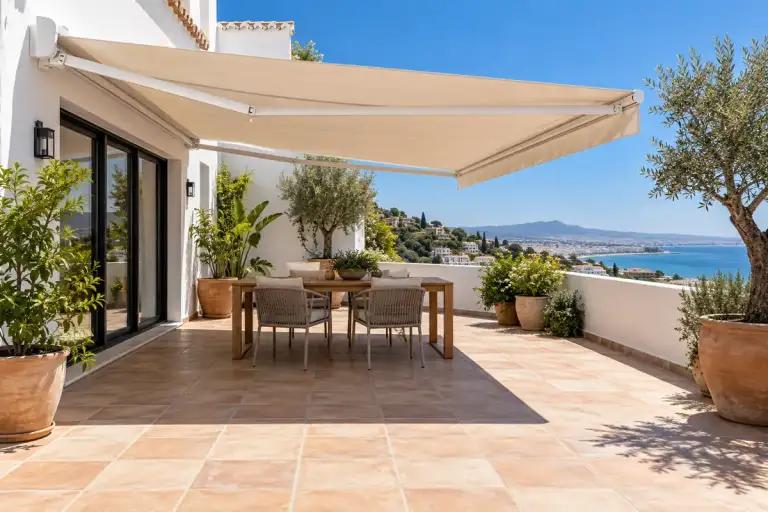
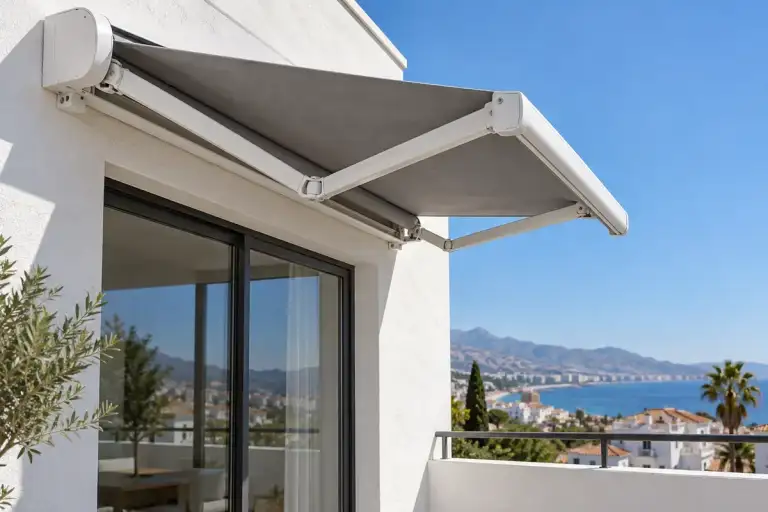
If you don’t want a glass enclosure, there are alternatives that retract fully. A zip screen lowers a screen fabric held in side channels by a zip edge: it filters the sun, blocks the wind without flapping and lets you see out. A windbreak awning with side channels uses clear or micro-perforated fabrics and is very common on porches and bar terraces.
Enclosing a porch or a pergola
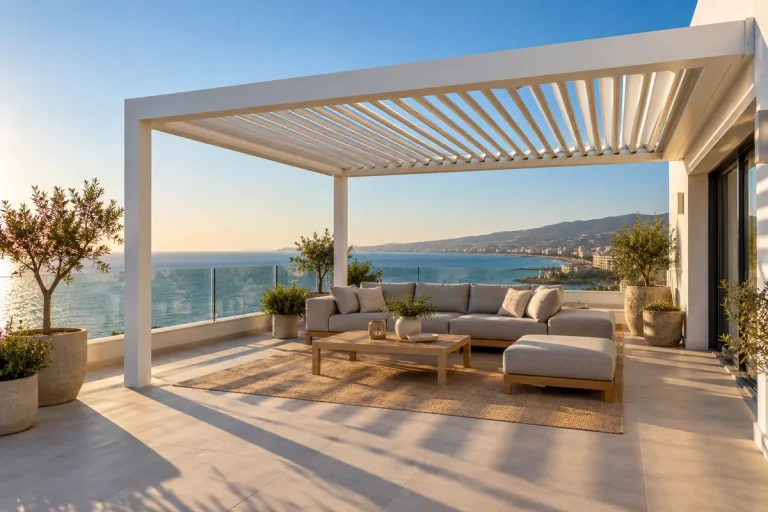
If your porch already has a roof, it’s enclosed just like a terrace. If it doesn’t, it can be combined with a wall-mounted pergola or a bioclimatic pergola and the sides closed afterwards. We explain how it works in our guide to bioclimatic pergola pros and cons.
Terrace enclosure comparison table
This table sums up how the most common systems behave. It’s a guide only: the final choice depends on the measurements, the wind and what your building allows, which we always check during the visit.
| System | Wind and water | When open | Where it fits |
|---|---|---|---|
| Aluminium and glass sliding panels | The most complete seal, depending on the range | Panels stack behind one another | Terraces you want to use as another room |
| Zip screen | Blocks wind; less protection from rain | Rolls up into a top cassette | Large windows, porches and sunny pergolas |
| Windbreak awning with side channels | Stops wind and light rain, depending on the fabric | Rolls up onto a top tube | Porches and bar terraces |
Not sure which terrace enclosure suits you? We’ll come and measure for free, look at the wind and orientation, and give you a written, no-obligation quote with a fixed price in under 24 hours. Ask for your free quote or call us on +34 694 57 17 33.
Do I need permission for a terrace enclosure?
It’s the most common question, and the short answer is: it’s almost always worth checking first. A terrace enclosure changes the outside appearance of the building and, in many cases, the usable floor area of the home.
The community of owners
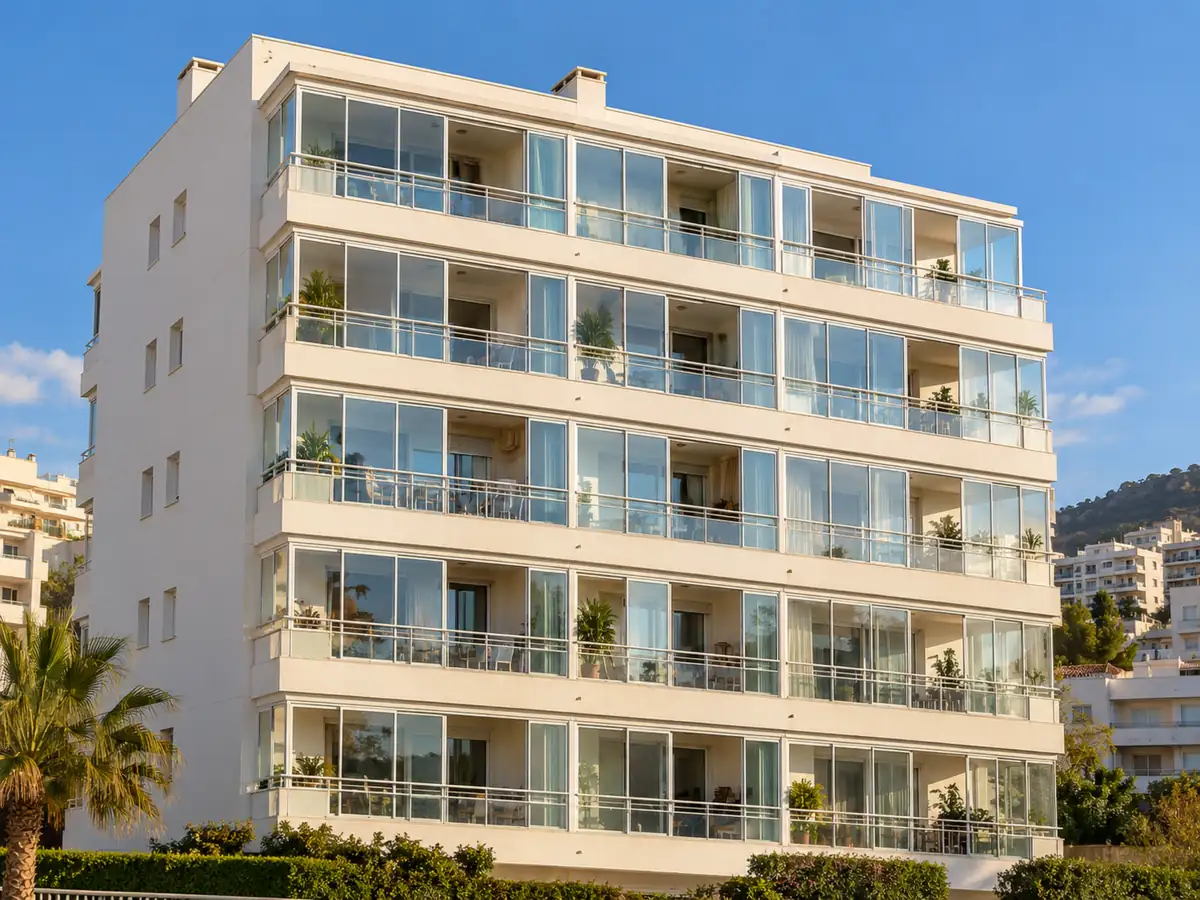
In an apartment building, the facade is a common element. That’s why enclosing a terrace usually needs the community’s approval, and many communities also require the same model and colour for every owner.
Which majority is needed depends on the case and on the community’s rules, so it’s best to discuss it with the property administrator. The reference law is Spain’s Horizontal Property Act, and we explain it in our guide to awnings and enclosures in a community of owners.
How to propose a terrace enclosure to your community
If you live in a flat, these steps save time and arguments with the neighbours:
- Ask whether there’s an approved model: many communities have already set the frame colour and type of terrace enclosure for the whole facade.
- Get a written proposal: with the system, the colour and a clear description, so the administrator can take it to the owners’ meeting.
- Think about the other neighbours: a simple, repeatable model is easier to approve and keeps the facade uniform.
- Keep the agreement: the meeting minutes protect you if anyone asks about the enclosure later on.
At QUBRE we prepare that proposal with measurements and system details so you can present it without hassle.
The town hall
Every town hall has its own rules. Depending on the municipality and the type of work, it may ask for a minor works licence or a responsible declaration, and in some cases it considers that enclosing a terrace increases the built area. So before manufacturing, we tell you what your town hall usually asks for and prepare the documents when they’re needed. There’s more detail in our guide on permission for awnings, pergolas and enclosures in Spain.
How to choose a terrace enclosure on the coast
On the coast of Malaga and Granada, an enclosure doesn’t just have to look good: it has to withstand sun, wind and salt air for years. Look at these points.
The wind: levante and poniente
On exposed terraces, like many penthouses in Torre del Mar, Rincón de la Victoria or Torremolinos, the wind pushes against the enclosure and finds any gap. There you want a system with a good seal, such as sliding panels from the right range, and fixings calculated for the size.
Salt air on the seafront
Near the sea, salt attacks fixings and poorly protected frames. Choose powder-coated aluminium frames and stainless-steel fixings, and keep the tracks clean so the panels keep sliding smoothly. At QUBRE that’s how we work on every coastal installation.
Orientation and heat
A glass enclosure facing south or west lets in a lot of sun, and in summer heat can build up inside. The answer is to combine the enclosure with outside shade, such as an awning or a zip screen, and leave panels open for ventilation. We explain how to choose the right shade in the best awning to keep the heat out.
Measurements and floor
Before choosing a model, you need accurate measurements. A floor sloped to drain water, an uneven ceiling or a low wall all change how the tracks are fitted. That’s why during the visit we measure several points of the opening and tell you whether any finishing work is needed before your terrace enclosure is made.
How you’ll use it
Enclosing a terrace for a winter dining room isn’t the same as protecting a drying area or a bar terrace. Tell us how you want to use the space and we’ll suggest the system, number of panels and opening that suit it best. For businesses, also see our awnings and enclosures for bars and restaurants.
Terrace enclosures for flats, penthouses, villas and businesses
Each type of property has its own needs:
- Flats: the community decides. The usual approach is to close the front with sliding panels in the colour and model the community has approved.
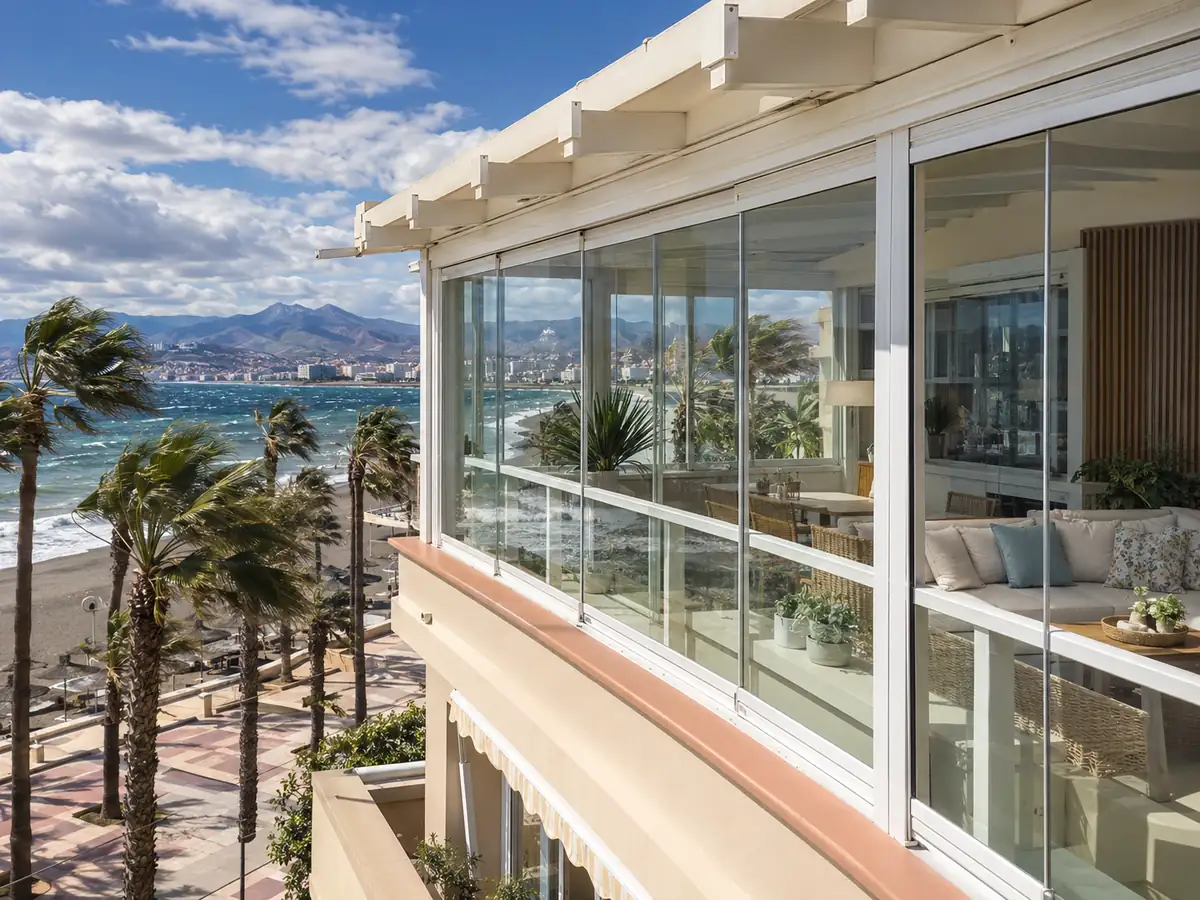
- Penthouses: more sun and more wind. It pays to combine the enclosure with a pergola or an awning and plan the fixings carefully.
- Villas and houses: the porch is the prime candidate. Enclosed, it becomes a dining or sitting room all year.
- Bars and restaurants: lightweight enclosures and windbreaks let you open and close according to the weather and opening hours.
You’ll find examples from each area on our pages for Torremolinos, Benalmadena, Fuengirola and Velez-Malaga, among other towns.
Terrace enclosure in Malaga, the Axarquía and Granada
We work across the province of Malaga and the Costa Tropical of Granada, and each area needs something different. This is what we see most often in each one.
Axarquía: Vélez-Málaga, Torre del Mar, Nerja and Torrox
From our base in Vélez-Málaga we look after many country-house porches and seafront apartment terraces. In Torre del Mar and Rincón de la Victoria the levante rules, so a terrace enclosure with well-sealed sliding panels makes all the difference. In Nerja and Torrox there are plenty of terraces with views nobody wants to block: there we go for slim frames and large panels.
Malaga city and the Costa del Sol
In Malaga city, Torremolinos and Benalmádena, most homes are flats in buildings with a community of owners, where the terrace enclosure has to follow the approved model. In Fuengirola, Marbella and Estepona we work more on penthouses and villas, where terrace enclosures are often combined with pergolas and zip screens for extra shade.
Costa Tropical and Granada
In Motril, Salobreña and Almuñécar the climate is mild, but the coastal wind is still there. In Granada city and its metropolitan area the winters are cold, and a terrace enclosure lets you use the balcony or porch when it’s not inviting outside. If you also want shade in summer, see our bioclimatic pergolas in Granada.
Looking after a terrace enclosure
A good enclosure needs little maintenance, but on the coast it’s best not to neglect it:
- Clean the tracks: sand and dust are the enemies of sliding panels. Vacuum them and wipe them with a damp cloth now and then.
- Rinse the frames: on the seafront, water and mild soap remove salt deposits.
- Check the seals: if you notice air or water getting in, the panels may need adjusting.
- Glass: clean it like any window, with no abrasive products on the coating.
And if you enclose with fabric, look after it too: we give tips in how to clean an awning.
Terrace enclosure: price and what affects it
We don’t give ballpark prices, because every terrace has its own measurements, height and conditions, and a generic figure would mislead you. This is what makes a terrace enclosure cost more or less:
- Linear metres and height: the wider and taller the opening, the more frame and glass.
- System: sliding panels on two or more tracks, number of panels and type of opening.
- Type of glass: thickness and type of glass depending on the system and model.
- Frames and colour: aluminium range, powder-coated finish and wood effect or other colours.
- Ceiling and finishes: closing up to an existing ceiling, a pergola or an uneven wall.
- Permits and access: the paperwork needed, the floor the flat is on and how easy it is to get the materials up.
At QUBRE the visit is free and we give you a written quote with a fixed price in under 24 hours. There’s more information on our page about terrace enclosures in Malaga.
Common mistakes when enclosing a terrace
- Starting without asking the community: it can end with an order to take it down.
- Enclosing without thinking about heat: west-facing glass with no outside shade turns the terrace into a greenhouse.
- Choosing the system from a photo: what looks good in a magazine may not be best for a terrace with strong levante; the wind and how you use it come first.
- Materials not made for the coast: unprotected fixings and uncoated frames corrode in salt air.
- Forgetting ventilation: you need to be able to open panels so damp doesn’t build up.
- Not planning fly screens: if you’ll open up in summer, consider made-to-measure fly screens from the start.
How we install your terrace enclosure at QUBRE
From our base in Vélez-Málaga we work with our own technical team across the Axarquía, Malaga city, the Costa del Sol and the Costa Tropical of Granada:
- Free visit and measuring: we measure the opening, floor and ceiling, and look at the orientation and wind.
- Proposal and quote: we explain which system suits you and give you a written, no-obligation quote with a fixed price in under 24 hours.
- Community and permits: we tell you what your community and town hall may ask for and prepare the documents when they’re needed.
- Made to measure and fitted by our team: no subcontractors, with powder-coated aluminium and stainless-steel fixings.
- Testing, guarantee and aftercare: we open and close every panel with you; you get a 2-year guarantee on materials, depending on the manufacturer and product, a guarantee on the structure and installation, and after-sales service.
We’ll add another room to your home. Free measuring and a no-obligation quote with a fixed price in under 24 hours for your terrace enclosure. Ask for your free quote or call us on +34 694 57 17 33.
Frequently asked questions about terrace enclosures
Which type of terrace enclosure is best?
It depends on the wind and how you’ll use it. Aluminium and glass sliding panels give the most complete seal against air and water, and zip screens or windbreaks are lightweight options that retract fully.
Do I need my community’s permission to enclose my terrace?
In most buildings, yes, because the facade is a common element. Which majority is needed depends on the case and the community’s rules: check with the property administrator before ordering the enclosure.
Do I need a licence from the town hall?
It depends on the municipality and the work. A minor works licence or a responsible declaration may be required, and some town halls consider that an enclosure increases the built area. We tell you what applies in your case.
Does a terrace enclosure get hot in summer?
If the glass gets direct sun and there’s no ventilation, heat can build up. You avoid it by combining the enclosure with outside shade, such as an awning or a zip screen, and opening panels to ventilate.
Glass enclosure or fabric screens?
Glass seals against wind, rain and noise and turns the terrace into another room; fabric screens, such as a zip screen or a windbreak, retract fully, give shade and block the wind, but insulate less.
Can a porch or a pergola be enclosed?
Yes. If the porch has a roof, it’s enclosed just like a terrace. If it doesn’t, it can be combined with a wall-mounted or bioclimatic pergola and the sides closed with glass, zip screens or windbreaks.
How much does a terrace enclosure cost?
It depends on the metres, height, system, glass, frames and finishes. At QUBRE we measure for free and give you a written quote with a fixed price in under 24 hours.
Conclusion: a well-chosen terrace enclosure gives you another room
The right terrace enclosure depends on the wind, the orientation, what your community allows and how you want to use it. Choose a system with a good seal, materials made for the coast and outside shade for summer, and you’ll enjoy your terrace all year.
At QUBRE we help you choose with good judgement, with a free visit and measuring in Malaga, the Axarquía, the Costa del Sol and the Costa Tropical of Granada. Ask for your no-obligation quote and we’ll send it in under 24 hours.